The legend of Beddgelert has its roots in the 12th century when this picturesque valley in Snowdonia belonged to a Prince of Wales known as Llywelyn ap Iorwerth. Keen on both hunts and battles, he owned dozens of fierce dogs, but always kept his favourite, an intelligent and loyal hound known as Gelert, close by his side. Gelert was the only dog allowed to sleep in the family’s lodge and the only one that could be trusted to be gentle with the prince’s children.
However, things took a bloody turn one morning when the Llywelyn left the lodge on a deer hunt, hoping to bring back venison for supper while leaving Gelert behind to guard his wife and son at the royal lodge.
On the prince’s return from a successful day of hunting, he came upon a shocking sight. In the hunting lodge, where his son should have been, he found Gelert panting with gore matting his fur all over his body. In the centre of the room, his boy’s crib lay overturned with a steady stream of blood trickling out and pooling on the wooden floor.
In a fit of rage, Llywelyn drew his sword and plunged it deep into the dog’s throat.

It wasn’t until the stricken hound lay dying that the prince heard a quiet whimpering coming from beneath the crib. Lifting it, he found his infant son lying on the floor completely unharmed and next to him, obscured by a bloodsoaked blanket, the body of an enormous wolf with its throat ripped out. Gelert had defended his master’s son and been killed for his loyalty.
Llywelyn decided that Gelert must never be forgotten and received a burial normally reserved for noblemen in a meadow just outside of the village that is now Beddgelert (Gelert’s grave). Walking alongside the tree-lined stream southwards out of town past the quaint, stone church of St. Mary’s, you will now find two stone markers beneath a tree, laid there as a simple memorial to the legend of Gelert and his master Llywelyn ap Iorwerth.


Although this is undoubtedly a heart-wrenching tale that draws visitors who wish to pay homage to Gelert from all over the UK to this corner of Snowdonia, its veracity is always in question as the story of the faithful hound is a universal one repeated all over the world and possibly just an early example of the ancient art of storytelling. In this case, it is believed that in the late 1700s a group of villages conspired to create their own local legend, borrowing the age-old yarn of the faithful hound and adapting it to suit the history of the area.
The name Gelert could have been derived from Kelert, a 5th-century Celtic monk who may have lived and died in the vicinity of the village. The ringleader of this scheme was David Pritchard, landlord of The Goat Inn – a hotel that still stands on the outskirts of Beddgelert and goes by the name of The Royal Goat Hotel – with the aim of attracting a mix of pilgrims and tourists.
It’s not that Beddgelert needs any tall tales to attract visitors these days; the draw of Snowdonia with its widescreen vistas, countless hiking trails, and rugged peaks are more than enough to bring the crowds and the village itself has a charm that is almost without peer in the boundaries of the national park.
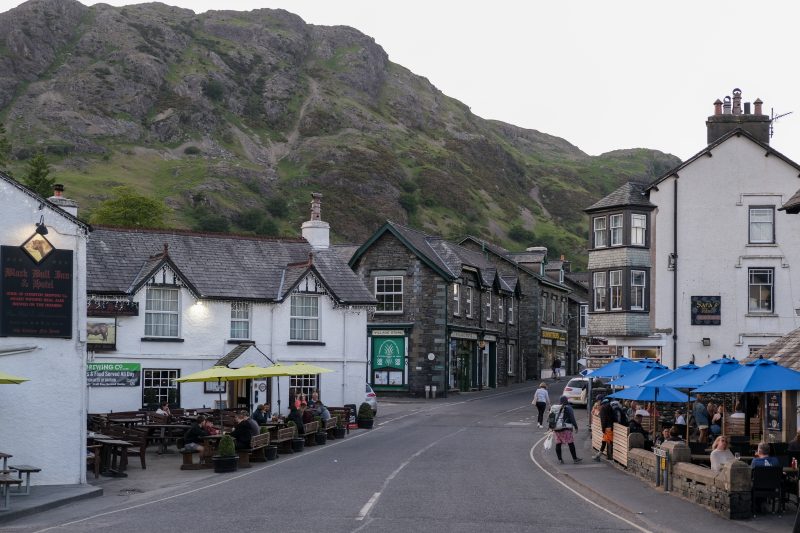
It only takes a brief sunny spell for the crowds to descend on the point where the Colwyn and Glaslyn converge, meaning on the bustling August weekend when I arrived in the village, the babbling brook that runs beneath Beddgelert’s pretty stone bridge is already a riot of paddling toddlers and splashing teens. The pretty stone cottages and country pubs that run alongside the Colwyn give the feeling that this would be one of North Wales’s most popular tourist hotspots even if the legend never took hold here.


Then again, it seems that Prince Llywelyn ap Iorwerth’s trust mutt isn’t the only famed animal to emerge from this valley; Alfred Bestall, the author of the Rupert Bear stories which ran for over 40 years in the Daily Express newspaper illustrated many of his cartoons from his cottage, Penlan, at the foot of Mynydd Sygun and Hollywood films such as Tomb Raider 2: The Cradle of Life starring Angelina Jolie and he Inn of the Sixth Happiness starring Ingrid Bergman where both filmed in the area surrounding the village.
Whether Beddgelert’s popularity is down to the work of David Pritchard is a matter of debate, but he died a rich man in 1821 thanks to his shrewd marketing. Maybe it is irony, or a crude joke by Llywelyn’s insulted spirit, but the local landlord became a legend in his own right.

For weeks after the burial, the Goat Inn was the scene of many peculiar incidents. Foodsteps were heard on the stairs during the night, there was knocking on bedroom walls and in one of the bar rooms, the sounds of fire and coal being raked – a habit of the late landlord – was a frequent occurance. Despite the prayers of staff and servants, the odd events became more frequent until local people began seeing David Pritchard himself roaming the village at night, dressed in his usual clothes. The village was in the grip of fear with people refusing to venture out of their houses after sundown.
It has been over a century since the ghost of David Pritchard has been seen in Beddgelert, although the Inn still stands on the A4085. Who knows, if you pay a visit to Gelert’s Grave and spend the night at the Royal Goat Hotel, you may see one of the village’s many spiritual legends.
Where to Stay in Beddgelert
Beddgelert Campsite
Just a mile north of Beddgelert along the A4085, this campsite offers 59 hard standing pitches with electric hook up & 26 grass camping pitches all set within a tranquil conifer and broadleaf forest. As well as offering Wi-Fi, the camp grounds are well equipped with a café, takeaway, washing facilities, and toilet/shower blocks.
Plas Tan y Graig Guest House
This stylish and highly-rated B&B in the heart of the village is located beside Afon Colwyn. Each room has a private bathroom while the B&B itself features a shared lounge, garden and beautiful outdoor terrace. Plas Tan y Graig Guest House offers an à la carte or vegetarian breakfast.
Hotel Saracens Head
Adjoining the much-loved pub in the village centre, the rooms at the Saracen’s Head are modern and well-appointed, some of which even have a view of the mountains that serve as a backdrop to the town. The Saracen’s Head is dog-friendly with its own garden, terrace, and bar.
Where to Eat & Drink in Beddgelert
Glaslyn Artisan Ice Cream & Pizza
I try to visit Glasyn’s ice cream parlour whenever I pass through Snowdonia as no holiday in Wales is complete without a taste of one of their cones. There are over 24 homemade flavours to choose from, ranging from classics like vanilla and mint choc chip to wonderful peach sorbets and Turkish delights.
The adjoining pizza place serves up some of the best crispy, oven-baked pizzas in all of snowdonia.
Where: Glaslyn, Glandwr
When: Weds to Sat 11am – 8pm; Sun to Tues 11am – 6pm
Tanronnen Inn
Beddgelert has more than its fair share of good pubs for a village its size, but the homely and cosy atmosphere of the the Tanronnen Inn in the heart of town makes it the best of the bunch.
Where: A498
When: Mon to Fri 5am – 11pm; Sat & Sun 5am – 10.30pm
Y Bistro yn yr Hebog
Despite taking huge damage when floods bought on by Storm Francis burst through its doors in August 2020, Hebog bistro has bounced back to much acclaim following extensive refurbishment. The restaurant now gives a wooden cabin retreat vibe under the glow of its low-hanging industrial lighting, and the food more than matches the stylish interior. Dishes are a little fancier than Beddgeler’s other offerings with goats’ cheese bonbons, Scottish smoked salmon, Welsh topside and a chocolate desert that is legendary in Snowdonia all occupying the menu. There is also a scenic riverside terrace across the road that is a perfect spot for mid-afternoon cocktails.
Where: A4085
When: Thurs to Sun 12pm – 2.30pm & 5pm – 9pm; Mon 5pm – 9pm; Closed Tues & Weds
The Real Coffee Stop
Wales may be famous for its quaint tea rooms but if you need a good cup of coffee in Beddgelert, then the Real Coffee Stop is the place to go. Here you will find freshly ground coffee, wonderful homemade cakes, and colourful fruit smoothies.
Where: The Coach House, The Square
When: Daily 10am – 4pm
Walks & Hikes Around Beddgelert
Gelert's Grave Walk
The Gelert’s Grave trail is the shortest and easiest of Beddgelert’s hikes to complete, but perfect for passing an hour and getting an overview of the village. Starting at the pedestrian footbridge over the River Glaslyn, make your way past the church of St Mary (thought to have incorporated arts of a 13th-century Augustinian Priory) and follow the river’s edge until you arrive at the small monument that marks Gelert’s final resting place.
Continue following the path to Beudy Buarth Gwyn, keeping an eye out for the bronze statue of Gelert, which will then lead you back to the river, over a small footbridge where you will see a wooded island called Ynys Dol-leian (nun’s island) and eventually to another footbridge that crosses the River Glaslyn. From here you can follow the river back towards the village, passing the Cae Gel picnic area which was created to commemorate Rupert the Bear author Alfred Bestall who lived in a nearby cottage.
Distance: 1 mile (1.6 km)
Difficulty: Easy
Time to Complete: 1 hour
Rhyd Ddu to Beddgelert
This one-way route begins at the foot of Snowdon and shares a starting point with one of the mountains most popular hiking routes. However, this walk is a little less strenuous than that 12km trail. Beginning at Rhyd Ddu, the Lôn Gwyrfai path starts in the wide, open mountain landscape and follows the trail of an old slate railway before curving around Llyn-y-Gadair lake.
The route eventually enters the tranquil conifers of Beddgelert Forest. Various trails wind their way through this woodland so make sure to follow the Lôn Gwyrfai markers out of the forest to eventually reach the vantage point at Hafod Ruffydd Uchaf. The last mile is a pleasant stroll downhill to Beddgelert village.
To reach Rhyd Ddu, you can take the S4 Snowdon Sherpa bus service (twice an hour) from the village centre, however, I recommend the 25-minute steam-train ride on the historic Welsh Highland Railway that runs between the two villages.
Distance: 4.6 miles (7.4 km)
Difficulty: Easy
Time to Complete: 2 hours 15 minutes
Dinas Emrys Trail
The story of Prince Llywelyn the Great and his faithful hound isn’t the only tall tale to be set in Beddgelert. Another of Snowdonia’s most enduring legends is the story of Dinas Emrys, the lofty mountain castle that was home to the dragon that you see fluttering on Welsh flags.
According to legend, King Vortigern attempted over and over again to construct a castle on top of Dinas Emrys, but the newly erected walls would collapse each evening. The famed wizard Merlin was consulted and he claimed that there were two dragons fighting beneath the hill, causing the castle walls to collapse. When Vortigern and his men dug into the mountain, they were shocked to find that Merlin was right, and they released two dragons, one red and one white, who fought furiously. Eventually, the white dragon fled and the red dragon returned to his lair. Vortigern’s castle was built and named Dinas Emrys in honour of Myrddin Emrys (Merlin).
Dragons aside, it was believed that a castle did once stand on this site and in 1945, archaeologists discovered the ruins of the fortress dating to Vortigern’s time.
You can explore the hill today via a relatively easy walk beginning near Beddgelert that takes you past waterfalls and through beautiful Oak woodland to reach the summit. Start at the National Trust’s Princess of Gwynedd centre at Craflwyn, following the path through the woodland until you reach a fork. Take the right path and continue past a small waterfall, moving straight ahead when you reach the three-way junction in the trail. Continue until you reach another fork in the path and bear right. You’ll soon reach a stile in the wall on the right. Continue over the stile up into the woods. It’s a fairly steep, zig-zag walk to the summit of Dinas Emrys. To get back to your starting point, just retrace your steps down the hillside.
Distance: 2.2 miles (3.5 km)
Difficulty: Moderate
Time to Complete: 2 – 2.5 hours
Things to do In & Around Beddgelert
Sygun Copper Mine
While Wales is famous the coal mining industry that boomed here in the 19th and 20th centuries, with the northeast’s own Tower colliery managing to keep its doors (and pits) open until 2008, the histoy of copper mining in the area has a longer history.
A mine has existed on the site of Sygun Copper Mine since the days of the Roman Empire with production booming from the Victorian era until it was finally abandoned in 1903. The museum that replaced the working mine tells the stories of these gritty industrial times through dioramas and a self-guided tour while allowing you to explore the winding tunnels and large chambers of the underground complex.
Scale Snowdon (Yr Wyddfa)
Snowdonia is known for its spectacular landscape of wild, jagged peaks and rugged ridges punctuated by deep valleys and serene blue lakes. In all three of the region’s ranges: the Snowdon Massif, Carneddau and Glyderau you will find rewarding hikes but it is understandable that that most first-time visitors to Snowdonia want to conquer the tallest of them all. At 1,085m, Snowden – or Yr Wyddfa in Welsh – is the highest point in Wales, only beaten by Ben Nevis when listing Britains loftiest peaks. It is said that on a clear day, the views from the summit stretch all the way westwards to Ireland and even across Pembrokeshire to England’s peak district (although on multiple climbs I have never witnessed these kind of conditions).
There are 8 main routes up Snowdon that all vary in difficulty, although expect to be hiking anywhere between 6 and 8 hours for a round trip to the summit and back. However, difficulty is subjective, so it is always best to research each route before you climb and make sure that you come prepared for the climb. All of the trailheads are all linked by the Snowdon Sherpa bus, so it is possible to climb up one way and descend down another. If hiking isn’t your thing, the Snowdon Mountain Railway has wound its way up to the summit since 1896 and allows you to take in the stunning Snowdonia views without any of the leg-ache. The railway runs from late Spring until the end of October.

Ride the Ffestiniog & Welsh Highland Railway
The Ffestiniog Railway is the world’s oldest narrow gauge railway and has been running for almost 200 years. It takes passengers on a 13½-mile journey from the harbour in Porthmadog to the slate-quarrying town of Blaenau Ffestiniog, climbing 700 foot into the mountains past ancient oak woodlands, rivers and castles.
The journey that the Welsh Highland Railway takes is a little lengthier (it is the UKs longest heritage railway), running for 25 miles from Caernarfon, beside the foot of Snowdon and through Beddgelert, before reaching Porthmadog. Services operate until the start of November and passengers are able to ride in some of the most comfortable carriages on any heritage railway in the UK, including first class Pullman luxury and freshly-cooked food delivered to your seat.
Go Wild Swimming in the Watkin Path Waterfalls
Of the 8 trails that wind their way up Wales’ highest peak, the Watkin Path is one of the most challenging, second only to the daunting ridges of the Crib Goch route. Starting just above sea level, the Watkin rises steeply up the southern side of Snowdon before joining the Rhyd Ddu path near the summit.
If a challenging hike isn’t your idea of a fun day out, there are a series of waterfalls and pools on Cwm Llan at the trailhead of the Watkins path, usually occupied by tired hikers looking to freshen up after a tiring climb but they are worth visiting on their own.
To get there, take the A498 out of Beddgelert and continue past Llyn Dinas. You will find parking near the Gwynant Chapel café.
Getting to Beddgelert
If you are travelling to Beddgelert by car, take the A5 from Betws y Coed towards Capel Curig where the left turn onto the A4086 is signposted Beddgelert. At the Pen-y-Gwryd Hotel the road bears left into the A498 which will bring you to Beddgelert. From Caernarfon, take the A4085. The route should be well-signposted.
If arriving by train, the closest rail hub is Porthmadog (10 miles away), from which you will need to take the Welsh Highland Railway to Beddgelert. The Welsh Highland Railway also has stations at Rhyd Ddu and Caernarfon. The Sherpa bus service for Snowdon also runs regular transport to Beddgelert

Where to Park in Beddgelert
On-street parking in the village is very limited but there are two public pay-and-display car parks in the village, one on either side of the river. They are relatively small and can quickly fill up on weekends or sunny days so make sure that you arrive early. These cart parks do accept card payment. Elsewhere, there is a National Trust car park at Craflwyn which is free to NT members. Note that this machine only accepts coins.