Perched on a rocky hill beside the sun-drenched shores of Spain’s Costa Dorada, Tarragona’s formidable ancient past peels back like layers of an ancient fresco. Once the mighty Tarraco, the first Roman stronghold in Iberia, this city still hums with the whispers of emperors, gladiators, and merchants who walked its streets and plazas.
Tarragona’s history began much earlier than the abundance of Roman monuments would have you believe; it was originally settled by Iberians and then Carthaginians. It wasn’t until 218 BC, with Scipio’s march south against Hannibal, that Roman conquest of the Iberian peninsula took place.

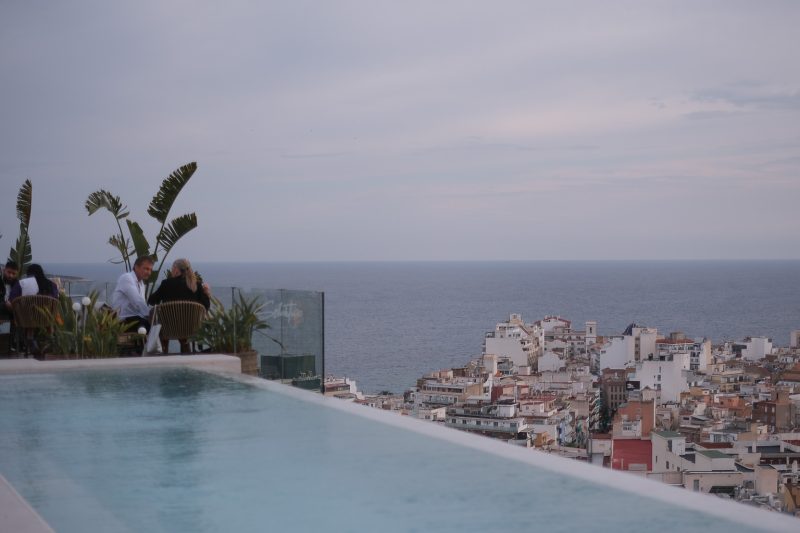
My first view of this ancient legacy is from the vantage point atop the terrace of my hotel, the stylishly elegant H10 Imperial Tarragona that sits just metres from the rugged shoreline.
From here, I’m overlooking the Roman amphitheatre, perched dramatically on a bluff above the Mediterranean. The structure, worn by time but still standing proudly, once echoed with the roar of 15,000 spectators watching gladiators battle beneath the open sky. Now, the only sound is the crash of waves against the shore below. It’s a rare sight – a Roman ruin with an uninterrupted sea view, as if history and nature have conspired to create something timeless.


A few streets beyond, the city climbs up from the sea in tight streets and crumbling walls. The Roman circus is still there, the adjoining tower rising above the terraces that run for three hundred metres through the modern-day city, with centuries of new buildings constructed in and around it. Such is modern Tarragona so intertwined with Tarraco, that you can see the foundations and theatre terraces running through the buildings of the high street.
Beneath the city’s modern streets, ancient passageways snake through the ruins, their dimly lit corridors whispering stories of the empire’s grandeur. As I walk through later that day, running my hand along the old stone surfaces, I can imagine the men that had once stood here too, waiting for the chariots to race, for the crowd to cheer.
The past is close in Tarragona and you can see it on almost every corner.

From the top of the Praetorian Tower, I take in a breathtaking panorama: red-tiled rooftops, narrow cobbled lanes, and beyond them, the endless shimmer of the Mediterranean.
It was under Augustus that Tarragona gained its power. It was fortified and became an imperial resort before being named capital of Rome’s eastern Iberian province. At its peak, it is thought that Tarraco was home to a quarter of a million people. It was the most cultured city in Roman Spain, packed with temples, monuments and important structures.


But Tarragona’s soul isn’t just Roman—it’s deeply Catalan, too. The Part Alta, the city’s old town, is a maze of ochre-hued buildings draped in bougainvillea, where laundry flutters between wrought-iron balconies. Here, traces of medieval Tarragona stand beside the ancient stones, and life moves at a leisurely Mediterranean pace. I pass small shops selling handmade ceramics and bookstores stacked with old maps, the scent of freshly-cooked seafood mingling in the warm afternoon air.


That’s because, in Tarragona, history isn’t just something to see; it’s something to taste. In Plaça de la Font, the lively square that once formed part of the Roman forum, locals sip vermut, the city’s signature aperitif, served over ice with a sliver of orange.
In one such square, I find myself sat in the shade outside a taberna; it’s old-school; decked out entirely in oak and the kind of place you would expect to stumble across fisherman and salty sea dogs fresh from procuring the day’s catch.
I nurse a couple of glasses of Priorat wine that are expertly poured by the owner. I drink it slowly as the waiter brings plates of crisp, fried whitebait, calçots, blackened from the fire, soft and sweet with romesco sauce, and a mildly spiced rice dish speckled with small soft-shelled crab.

But Tarragona’s true culinary treasure lies down by the harbour, in the old fishing district of El Serrallo. Here, seafood is the lifeblood of the community, with many of the most traditional Catalan seafood dishes being popularised by the fishermen who earned their trade off this coastline.
The Costa Daurada’s burgeoning culinary scene still embraces these age-old seafood dishes, in both seaside taverns and Michelin-starred restaurants. At the same time, you will find wonderful and unique takes on food from all over Catalonia in El Serallo’s restaurants, from the coast to the mountains via the countryside.
The focus is always on using the finest ingredients as a flavorful foundation on which countless dishes are built, Whether that is the fish, vegetables, picada – a paste pounded in a mortar from garlic, parsley, and almonds or hazelnut – or the cheese, oil and stunning Priorat wine that is served alongside the main meal.


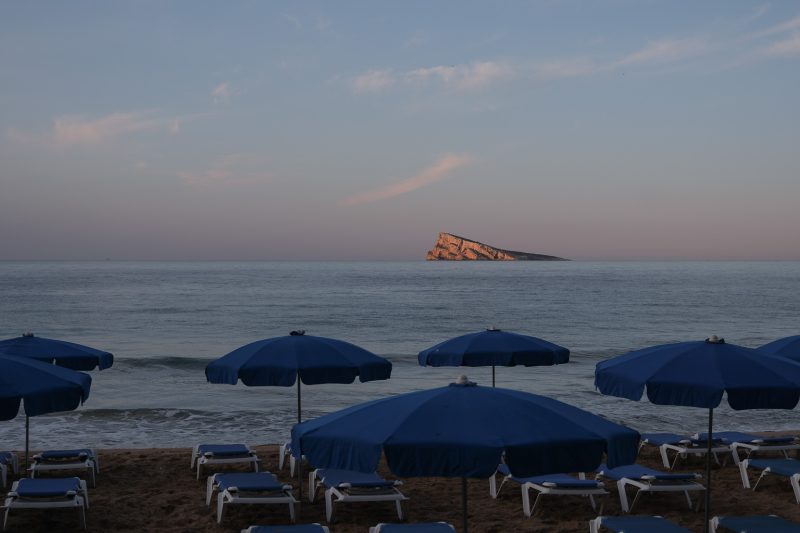
On my final morning, I join the locals for a sunrise walk to the Balcó del Mediterrani, a viewpoint where locals and visitors alike gathered to take in the sweeping ocean view. The golden light bathed the city in a warm glow, casting long shadows over the Roman ruins and medieval buildings.There’s the sound of the city rising, people gossiping over their morning coffee, and the distant sound of waves crashing against the shore, all creating a peaceful rhythm.
It’s easy to see why the Romans decided to make this spot their western capital and easy to see why people flock to this small stretch of the Spanish coast. There is something about the way the past seamlessly blends with the present, in the way people took the time to enjoy life’s simple pleasures: a good meal, a glass of wine, a conversation with a friend.

While Tarragona has so much more to offer than its ancient past, like a ruined amphitheatre that sits steadfast by the sea for centuries, unchanged, this is a city that will linger with you for a long time to come.
Getting to Tarragona
You will find Tarragona in the autonomous region of Catalonia in the northeast of Spain. It sits beside the Mediterranean at the heart of the Costa Dourada, just over 100km south of Barcelona.
By Air
Aeropuerto de Reus, just a 15 to 20-minute drive west of the centre serves Tarragona and the surrounding towns of Salou, Cambrils, and Reus with regular flights from most major UK airports.
A taxi to Tarragona from Reus Airport will cost around €30, however, Hispano Igualadina buses run between Tarragona’s bus station from Reus Airport approximately 3-5 times per day.
The much larger Barcelona El Prat Airport is around 90 km away. There is a bus that services the route between the Airport’s Terminal 2 and Tarragona or another option is to take the Aerobus into Barcelona and from there, catch either an onwards train or bus.
By Train
Tarragona Estació is mostly served by intercity and regional express services and it is on the main line between Barcelona and Alicante. From Barcelona, you can take the R14, R15, and R16, each of which takes around 1 hour and 20 minutes.
Camp Tarragona is on the Madrid to Barcelona high-speed line, providing services from Zaragoza, Madrid, Seville, Malaga, Burgos, Vigo, Bilbao and San Sebastian. The bus between Camp Tarragona and the centre runs regularly between the hours of 6am and 11pm.
As Tarragona is an easy day trip from Barcelona, there are plenty of tours available that include transfers and a knowledgeable tour guide.
Getting Around
Tarragona has a compact and easily walkable city centre, meaning that travelling between sights is easily done on foot. This is probably the best way to traverse the city as many narrow streets and picturesque squares are pedestrianised. This also allows you to stumble across some of the city’s hidden archaeological gems or stop for an impromptu vermut at one of the old town’s many vermuterias.

If you don’t want to walk or want to travel further afield to places such as the El Serrallo harbour district which is 3km from the city centre along the promenade, there is also an extensive bus network that you can take advantage of.
Alternatively, a quaint and unique way to see Tarragona is by hopping aboard the Tarragona Tourist Train, also known as Yellow Train (I’m not sure why, as it happens to be blue). One trundling journey around the city takes around 45 minutes and costs €8 per person (€ 6 for children), taking in all major tourist sights. They also offer a full-day hop-on-hop-off ticket for €19, allowing you to get on and off the train as many times as you want throughout the day.
Although the initial meeting point is Plaza de la Unesco. The Yellow Train stops at:
- Arrabassada
- Miracle
- Necropolis
- Presidente Companys
- Imperial Tarraco
- Rambla Nova
- Roman Forum
- Balcony of the Mediterranean
Things to do in Tarragona
Although Tarragona is most widely known for its UNESCO-listed Roman sites, amongst the ruins and rubble and medieval streets is a city packed with vibrant culture, lively plazas and countless things to see. Whether you’re drawn to seaside relaxation, eager to experience Catalonia’s rich culture, fancy a stroll along the Rambla Nova or savouring fresh seafood by the harbour, there is plenty to keep you occupied during a city break in this remarkable city.
Explore Tarragona's Roman Ruins
Tarragona, once known as Tarraco, was an important Roman city and the first major settlement of the Roman Empire in Spain. Founded in the 3rd century BCE, it became the capital of Hispania Citerior and later a key administrative and military centre. Over Millennia, the city grew around and on top of Tarraco’s remains, meaning that amongst the modern streets and squares, you are likely to stumble upon all manner of archaeological and historic gems, instantly transporting you back to the days of ancient Tarraco.
Tarragona’s Roman ruins are so significant that they were designated a UNESCO World Heritage Site in 2000. Countless sites remain, in varying states of completeness or ruin, but a day can easily be spent exploring what is left and gawping in wonder at the scale and complexity of the Roman Settlement that once stood here.
Praetorium and Roman Circus
Walking through the tunnels beneath Tarragona’s Roman Circus, located between Via Augusta and the provincial forum, you can almost hear the roars of the 30,000 strong crowds, yelling in support of their chosen chariot rider or gladitorial contender.
It’s a vast, 1st-century structure that stretches 325 metres through central Tarragona, unusually, with the city being built around and on top of it. Still, it remains one of the best-preserved circuses in the West, with many of the stands, structures and ruins hidden within 19th-century buildings


From the underground passageways beneath the circus, you can access the Praetorium, a Roman-era tower that once housed the stairs that connected the lower city to the provincial forum. It’s worth climbing the steps (or taking the lift) to the top for fantastic views of the city.
Roman Amphitheatre
The most striking and complete of Tarragona’s ruins, the Roman Amphitheatre sits in a spectacular coastal position above the city’s shoreline overlooking the turquoise waters of the Mediterranean.
Built at the turn of the 2nd century A.D, it is thought to have seated up to 14,000 spectators who witnessed gladiatorial battles, races, and public executions.


The Amphitheatre was also the site of the martyrdom of Saint Fructuosus and his deacons in 259 A.D. To commemorate the event, a Visigoth basilica was built on the site at the end of the 6th century, over which the medieval church of Santa Maria del Miracle was subsequently established in the 12th century.
While only the concrete vaults, a heavily eroded section of the northern stands and a section of the southern stands survive, it remains an impressive testament to the architectural prowess of ancient Rome, particularly when you think the structure filled with thousands of people experiencing thrilling displays of combat.
Provincial Forum
For a time-hopping view of history, head to the Provincial forum where the modern city coexists with its imperial past; historic archways and Roman remnants sit amongst the al fresco diners in the city squares, several inscribed pedestals can still be seen along Carrer Merceria, and the ruins of the intricate portico that once surrounded the forum can be found spread throughout Antiga Audiència, Plaça del Pallol, Plaça de Santiago Rusiñol, and Plaça del Fòrum.

Roman Forum
For a glimpse into the daily life of ancient Tarraco, then head to the forum, which was the city’s major hub. Although this was once a vast square lined with shops and important buildings such as the curia, basilica and temples, not much of it remains. However, a portion of the basilica is still standing and some sections of the ruins can be explored.


La Rambla Nova & Balcó del Mediterrani
Head to the end of Tarragona’s busiest thoroughfare, at the point where it reaches the coast, and you will notice the city’s natives embarking on the strange tradition of tocar ferro, or ‘touching the iron’ of the fence that lines the Balcony of the Mediterranean.

Although Tarragona has retained much of its layout since the days of Roman occupation, the or Rambla Nova, or new avenue, has only been around for 150 years. Since then, it has become the central axis of urban Tarragona, stretching from Plaça Imperial Tarraco to the Balcó del Mediterrani and from the Part Alta (the historic quarter) to the local forum.


As well as being an important shopping street, with boutiques, international fashion stores, local handicrafts, jewellers, and traditional shops all lining the Rambla Nova and its surrounding streets, it is also worth walking the length of the avenue to take in the buildings, some of which have great historical and architectural interest, as well as sculptures, fountains and monuments, all with rich histories.

Locals, however, often stroll the length of Rambla Nova in order to touch the Balcony of the Mediterranean and the railings designed by Ramon Salas i Ricomà in 1889 (before that, a simple wall separated the promenade from the sea).
It’s a vantage point from which you can look out over the Mediterranean, the Port of Tarragona, Platja del Miracle (Miracle Beach) and the Roman amphitheatre, thought to have been given its name by Emili Castelar, the president of the First Spanish Republic when he visited Tarragona in 1863.
Catedral de Tarragona
Located on the highest point of the city of Tarragona, the Cathedral was built on the site where the Temple of Augustus used to stand in Tarraco. Between Roman settlement and the foundation stones of the cathedral being laid in 1184, there had also stood a an old Christian basilica on this site that, in turn, was erected on top of a 10th-century Arab mosque.


This city’s most emblematic building contains the richest collection of medieval art in Tarragona. It has been embellished and added to over the centuries; above its Latin-cross floorplan, with three naves and an accentuated transept, stands an impressive octagonal dome. The two Romanesque portals originated in the 12th century, and the main facade, alongside its stunning rose window with openwork tracery, was added in the 14th century.

There are a few too many architectural gems and wonderful sculptures contained inside to list here – such as the main altarpiece, begun in 1429 and the work of the sculptor Pere Johan – but the cloister, a veritable haven of peace from the city, and the Diocesan Museum which contains a collection of beautiful tapestries from the workshops of Brussels, are particularly noteworthy.
Merkat Central
I always make an effort to stop at local markets while travelling. Not only do they offer the opportunity to buy some fresh produce, they are a good way to gauge the pulse of a city, meet local people and get a taste for a region’s cuisine.
There’s been regular markets in Tarragona’s city centre for over two millennia. Back when it was known as Tarraco, people who lived in the countryside had a fixed day to go and sell their agricultural products in the city. This was known as the nundinae: market day.
During Ancient Roman occupation, at the stabulae next to the city gates where weary travellers could leave their horses and wagons, fruits, vegetables, and legumes were displayed on the trestle tables of stalls in an attempt to part them with their coins.


The modern equivalent in Tarragona is the twice-weekly farmers market at Plaça del Fòrum. While animals are no longer slaughtered here to appease the gods, not much else has changed. This is still a place in which farmers travel from all over Camp de Tarragona to display their ripe and sumptuous produce at simple stalls.
However, if you really want to get a taste of Catalonia’s cuisine, then you should head straight for Tarragona’s Central Market where alongside fresh meat, fish, and vegetables, you can pull up a stool and sample local dishes with a beer or glass of wine (preferably from the Priorat).


Alongside the food, the architecture of the building is the main pull. Drawing on the region’s strong Modernist influences, this spectacular building was designed by Josep Maria Pujol de Barberà who created a space supported by cast iron columns with the aim of letting in light and creating a greater sense of spaciousness.
If you visit at the right time (at 12 noon or 6 p.m), you will notice some movement from the clock above the market’s main entrance. As the song ’Amparito Roca’ chomes out, the doors beneath the clockface open and 7 figures that represent characters of the Santa Tecla procession will emerge and moce to the sound of the music.
Museu Nacional Arqueològic de Tarragona
Currently undergoing a large-scale renovation that has spanned years with no sign of being imminently completed, The Archaeological Museum of Tarraco (MNAT), in Plaça del Rei, houses an exceptional collection from the Roman period that reflects the historical and monumental importance of the Roman city of Tarraco and the archaeological sites in the surrounding area.
While the museum’s main building is being revamped the MNAT is currently hosting an exhibition of its collection at Tinglado 4 in the Port of Tarragona which tells the story of Tarraco through eight centuries, from it being the first Roman foundation on the Iberian Peninsula to becoming the capital of Hispania Citerior, the largest province in the Empire.
El Serrallo
Away from Tarragona’s old town and ancient ruins, the fisherman’s quarter of El Serrallo still holds great historical and cultural significance. You’ll find it next to one of Europe’s largest seaports but rather than container ships and ferries, it is small family-run enterprises and fishing vessels that built this neighbourhood. Even today it exudes tradition and genuine Catalan seafaring culture
Many of the most traditional Catalan seafood dishes were popularised by the fishermen who earned their trade off the coast of Tarragona; In the old days, when the boats arrived in port, the fishermen would start cooking on deck, throwing some leftover fish on the cooker to turn it into a rossejat (seafood rice simmered in fish stock), a suquet (stew) or a romesco. It is thought that the famed romesco originated with the fisherman of El Serrallo.
It was a poor person’s dish. The fishermen spent many hours at sea without a fridge and had to make the most of the food they carried with them; Dried bread, a handful of dried fruit that preserved well, wrinkled romesco peppers, and a piece of fish that could not be sold.

The gastronomic legacy has been continued by the fantastic seafood restaurants that line the shore here. The area is known for bringing in a catch of some of the most prized species of fish such as red prawns (native to Tarragona), cuttlefish, gadegang (also known as Norweigan lobster), blue whiting, hake, monkfish, mantis shrimp, deep-water pink shrimp, octopus and squid as well as typical oily fish like sardines, anchovies and mackerel.
This is still a working port and has retained much of its working-class character, with the fish market being a vibrant hub for seafood, including a wholesale market, auction rooms, and numerous fish restaurants, with fishermen arriving daily to sell their catch. The fish market is also home to the excellent Port Museum which offers a multi-sensory and immersive multimedia space called Observatori Blau.
Sample the Local Vermut
Vermouth has quite a storied past. Although the origin of its name is derived from the German wermut, which means wormwood, the fundamental plant in the drink’s recipe, it is believed that it has existed in some form or another since Ancient Greece, when wines were flavoured with certain aromatic plants and herbs, including wormwood. The tradition was probably brought to the Iberian peninsula during the Roman Empire.
Modern vermouth originated in Turin, Italy, in 1786. However, it is still common throughout Catalonia and grew in popularity in Catalonia during the 18th and 19th centuries when, at the time, Reus was one of the world’s most important centres of liquor production. Nowadays vermouth is still more closely associated with Reus than Tarragona, but if you spend any amount of time walking through Tarragona’s squares, you will notice that the outdoor terraces are packed with people enjoying ‘the vermuteo’ – sharing a bottle with friends – or the tradition of ‘Vermouth Hour’, where people will gather to enjoy a midday, pre-lunch glass in a relaxed atmosphere, often accompanied by a bowl of olives and small plates.


Those with a deeper interest the beverage can head to Reus to follow the city’s Vermouth Route, visiting places and venues connected to Reus Vermouth’s history. These include the Rofes factory where you can sample their renowned vermouth in their old factory next to the huge vats where it was made while dining on typical Catalonian dishes, and the Vermouth Museum, which features over 6,000 items and exhibits linked to the history of the spirit.
Witness the mesmerising Human Towers
Catalunya’s famous Castellers, made up of teams competing to build human towers, is a tradition that originated in Valls, near Tarragona, at the end of the eighteenth century. Eventually, the practise spread throughout Catalunya and the spectacle can be seen taking place all over the region. The incredible castells vary in height and structure, but can often loom up to ten human storeys tall, and are completed by a small child scrambling to the very top.
Although this feat of human collaboration is usually seen at festivals and celebrations, there is also the opportunity to witness the most spectacular human tower performance at the Concurs de Castells, the only time building towers is a competition and a huge event in which 42 teams perform.

The human tower calendar changes every year so the best way to find out when and where you can see castells is to check the performances that are going to take place on a specific date a few days in advance. Remember that human tower activity does not always happen, as colles follow a season.


If you are visiting Tarragona outside of the season and still want to witness this visually striking display, there is the opportunity to watch rehearsal sessions that take place each Friday night, between 8pm and midnight, at the Colla Jove Xiquets de Tarragona headquarters on Cós del Bou street, next to the Roman Circus.

It’s an easy building to find, as on a rehearsal night the huge iron gates of this historic former fish market and firehouse remain open and the college members spill out onto the street outside while they wait for their turn. It is a sight to behold, as hundreds of people squeeze inside and build towers the entire 10-storey height of the building.
Spectators are welcome and I highly recommend heading upstairs to the mezzanine so that you can get a birds-eye view of the chaos below.
Tarragona's Beaches
Although many people visit Tarragona to soak in the history and culture as part of a short city break, it is home to 15 kilometres of coastline, and dotted with easily-accessible, alluring coves with crystalline waters which make it an enticing beach destination too. The beaches here are renowned for their extremely fine, golden sand: hence the region’s name, Costa Daurada, which means “Golden Coast” in Catalan.


As well as beautiful stretches of sand, nature-loves should note that the coastline is also home to a rich and varied ecosystem, containing a diverse range of saltwater flora, dune plants and marshland birds. These are highlighted by Tarragona’s two conservation areas:
In the Punta de la Móra Nature Reserve (PEIN, in Catalan) you will find an area of thick underbrush punctuated with Kermes oaks and fan palms, juniper forest, white pines and stone pines. It’s also known for its water-based flora – several types of seaweed thrive alongside a prairie of Neptune grass – which helps sustain a large number of fish species.
Gaià River Delta Nature Reserve and Tamarit Beach are a bird spotters paradise; 80 different bird species call this their home. There is currently a reforesting project underway in an attempt to to repopulate the area with native tree species, such as the black poplar or willow.
There are a dozen or more beaches dotted along this coastline, but most people will find themselves at Playa de la Arrabassada close to the city where you can rent beach beds, umbrellas, pedal boats and kayaks (it’s also a good starting point for the GR-92 hiking route along the coast) or Playa El Miracle, Tarragona’s city beach located between Playa de la Arrabassada and the port. Playa El Miracle can be seen from the Balcón del Mediterráneo and the Rambla Nova.
Where to Eat & Drink in Tarragona
Many of Tarragona’s restaurants focus on Catalan cuisine; rice dishes, romesco, seafood and stews occupy menus from traditional taverns to the upmarket, contemporary fine dining spots. It seems the chefs of Tarragona love to honour the region’s rich gastronomic heritage.
Barquet Tarragona
In a building that started life as a coal yard, then a siphon bottle filling factory situated next to the gas factory that gave the street it sits on its name – Carrer del Gasòmetre – it eventually was transformed into a bar, Bar Quet, by a woman known as grandmother Angeleta.
Despite being told by a Fisherman early on that her business would go down the drain, it is still running strong. In 1992, Angeleta’s two grandsons took over, converting the bar that, as well as selling coffee and drinks, was also the headquarters of the Tarragona Billiards Club and the Tarragona Gymnastics Club, into one of the city’s finest restaurants.
For three generations, the family have faithfully reproduced Traditional Catalan dishes and under the guidance of current head chef David Solé i Torné, it has earned a coveted place in the Michelin Guide.
Where: Carrer del Gasòmetre, 16, 43001 Tarragona
When: Monday to Saturday 1pm – 3.30pm
El Llagut
Ramon Martí spent much of the 80s and 90s trained in the shadow of some of the finest Michelin-starred chefs in Spain and Germany; first with Jean Louis Neichel (2 Michelin stars) in Barcelona, and then with Jean Claude Bourgueil (3 Michelin stars) in Düsseldorf.
With that kind of prestigious culinary heritage, you may expect his own restaurant – El Llagut, which he opened with his partner Astrid in the Part Alta neighbourhood of Tarragona – to be flamboyant and boundary-pushing. It is anything but that, which it turns out, is a good thing.


Sitting in one of the city’s most traditional squares with tables and parasols filling the pavement, El Llagut gives the impression of a quintessential seafood tavern with dishes to match. The menu consists of traditional, Catalan cuisine such as Arròs negre, a typical dish of black rice and squid, fried whitebait and Arròs mariner.
While the dishes may be simple, Ramon’s craftsmanship shines through. He is a strong proponent of the slow food movement, using only organic, high-quality, local products, with a menu that evolves along with the seasons and his cooking skills manage to take the standard masquetes, zarzuelas and romesco to a culinary pinnacle.
Where: Carrer de Natzaret, 10, 43003 Tarragona
When: Tuesday to Saturday 1pm – 3.30pm & 8.30pm – 10.30pm; Sunday 1pm – 3.30pm
La Xarxa
Featuring in the Michelin Guide for 4 years running, La Xarxa has come a long way since its humble beginnings 20 years ago. What started out as a simple fisherman’s bar in the port district of El Serrallo, just a few metres from the boat-filled harbour, it gained a new lease of life when it was passed from the original owners to their children.
While the restaurant retains much of its original essence, current chef Òscar Donato elevated the menu from traditional Catalan suquets, romescos, and rice dishes to create a modern and innovative à la carte that nods towards Asia with plates containing dumplings and Thai sauces, although the rice remains. One thing to note is that you can always expect quality fish here, as Òscar’s father is a fisherman who will go out each day to bring back a fresh catch.
Where: Carrer de Sant Pere, 38, 43004 Tarragona
When: Tuesday to Saturday 12.45pm – 3.30pm & 7.45pm – 10.45pm; Sunday 12.45pm – 3.30pm
El Pòsit
Sitting by the waterfront in the historic port neighbourhood of El Serrallo, El Posit offers a classic menu of fish, seafood and rice dishes with a strong focus on sustainable, local ingredients. We sampled a selection of starters which included anchovies in homemade hazelnut oil with hazelnuts from Reus P.D.O, candied artichokes with Iberian shavings, and a whole host of fried fish, from calamari to whitebait.


While shellfish and seafood are the focus, I opted for the Roasted Duroc pork ribs with Mediterranean herbs for my main cause: tender, delicious, and a welcome break after 4 days of mostly eating fish.

Where: Moll de Pescadors, 25, 43004 Tarragona
When: Daily 1pm – 4pm & 8pm – 11pm
El Terrat
Tarragona’s best example of modern, fine dining, chef Moha Quach combines his humble Moroccan roots- his father was a fisherman and his grandparents were shepherds – with a love of Catalan cuisine to create dishes that exude Mediterranean multi-culturalism.
There are two tasting menus available (Olivus and Mare Nostrum), plus another called Essencia which is only available for lunch midweek. These include an interesting mix of dishes, from marinated sea bass with liquid leek gnocchi or squid ink ravioli with slow-cooked Iberian cheek to quirky desserts such as Tangerine textures with ginger ice cream and orange blossom water.
Where: Carrer de Pons d’Icart, 19, 43004 Tarragona
When: Sunday to Thursday 1.15pm – 5pm; Friday and Saturday 1.15pm – 5pm and 8.15pm – 10.30pm
Casa Balcells
Nestled up against Tarragona’s stunning Cathedral and partly occupying a medieval palace that gives the restaurant its name, Casa Balcells immerses you in the city’s history while you dine; The basement houses archaeological remains from the Roman period and the dining hall sits within a 17th Century extension of the palace.
Like many other restaurants listed here, the menu is typical of Catalan fare but is done exceptionally well. We enjoyed plates of bravas aubergine with miso mayonnaise and chipotle sauce, Iberian ham croquettes, Andalucian squid and panko-crusted chicken, all complemented by a wonderful view of the Cathedral’s facade from our table on the first floor.
Where: Pla de la Seu, 5, 43003 Tarragona
When: Daily 12pm – 12am
Read More: Where to Eat & Drink on the Costa Dourada
Tours in & Around Tarragona
For a deeper exploration of Tarragona’s historic soul and vibrant culture, there are a huge number of guided tours on offer that will take you through everything from the region’s fishing heritage and food culture to a deep dive into the city’s Roman past.

If you would like to learn the full history of Tarragona while exploring its charming streets, guided walking tours are available with experienced local guides who will show you all of the major attractions as well as the city’s hidden corners.
Here are a selection of the best tours that you can take in and around Tarragona:
Where to Stay in Tarragona
While most people may choose to visit Tarragona on a day trip from Salou, Cambrils, or even cities further afield such as Barcelona, I feel it is worth an overnight stay, if not two.
My suggestion would be to stay in the bustling historic centre to ensure that you are close to most of the city’s main historical sights as well as be in the centre of its buzzy bar and restaurant scene. Luckily, nothing is far away in Tarragona and even when staying in a central location, you are just a short work from the shimmering, blue Mediterranean and the beaches of Playa El Miracle, Platja de la Rabassada, and Playa Gorda.
Central Location
H10 Imperial Tarraco
Sleek, Elegent and modern, the H10 Imperial Tarragona exudes contemporary Meditterenean charm thanks to its stripped back wooden, terracota and whitewashed details. The laidback lobby and bar area are reminiscent of 1920s art deco grandeur, albeit a littlemore subdued, while the rooms are airy and spacious with all the amenities you could need.
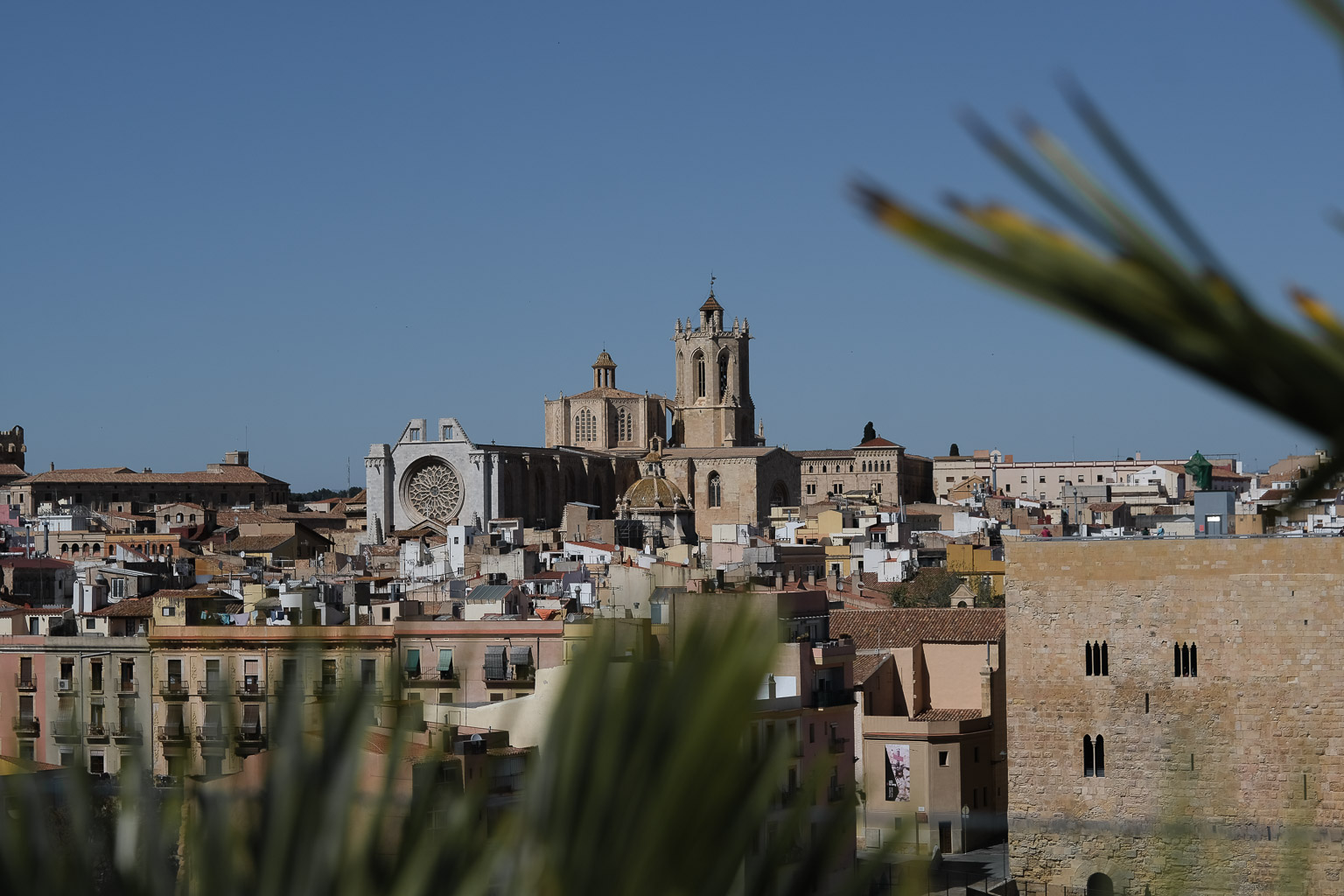
However, the real appeal of the H10 Imperial is the serene rooftop terrace which offers panoramic views of Tarragona; from the intimidating outline of the grand cathedral which dominates the skyline, to the ancient Roman Ampitheatre that nestles close to the city’s shore. It’s the perfect place to catch some rays beside the pool or unwind with a cocktail while soaking up the sights and sounds that unfurl in the city below.
Coastal Escape
Hotel Gran Claustre
Located less than half an hour from Tarragonna, the walled, hilltop village of Altafulla is not particularly well-known beyond the Costa Dourada, but this makes is the perfect escape from the bustle of the city.
Hotel Gran Claustre occupies a converted 18th-century mansion atop a hill overlooking Altafulla’s medieval centre. The hotel and spa, which also hosts a fine-dining restaurant is just a 15-minute drive from the beaches of Altafulla and Tamari.
Guesthouse
Hostal 977
If you like to be in the centre of the action, Hostal 977 is a stylish and guestouse at the heart of Tarragona’s old town and its grid of narrow, vibrant streets. The design concept here is minimalist; simple furniture housed in rooms decked out with wood and stone. The natural materials make the hotel feel like a unique blend of traditional and contemporary while the location means that it is the perfect base for exploring the city.
How long do you need in Tarragona?
It’s possible to see Tarragona in a day, with many people opting to travel here as a day trip from Barcelona or the neighbouring resort towns of Salou and Cambrils. However, I think it’s a city that is worthy of more time and to properly soak in the charming streets and abundance of archaeological gems, it’s best to set aside at least two days.
An overnight stay allows the opportunity to enjoy the balmy Mediterranean evenings when the quaint squares come alive with people enjoying al-fresco drinks on the patios of bars and restaurants. It will also give you a chance to dig deeper into Catalonia’s vibrant culinary scene.
Having said that, I think that 3 days in Tarragona would be the perfect amount of time, allowing you to explore at a slower pace; lazy mornings wandering the markets and relaxing on the beach in between casual coffee breaks and long lunches.
When is the Best Time to Visit Tarragona?
I would almost always recommend avoiding the Spanish coast during the summer months when both prices and temperatures are high. This is the time when British families tend to flock to the Costa Dourada for a week or two of sun, sand, and sangria and it can become busy. However, June onwards does see the start of the festival season with all manner of cultural events taking place in Tarragona.
Most notable of these is the castello, or human tower, season; A tradition that was first introduced in the 18th century in Camp de Tarragona and has since spread throughout the whole of Catalonia. The towers were declared an Intangible Cultural Heritage by UNESCO in 2010.

Although the human tower calendar changes each year, the season traditionally begins on Saint John’s Day (24 June) and ends with the Saint Ursula meeting (the Sunday after 21 October). It is thought that over 10,000 castells are raised each year with dozens of performances taking place on weekends.
The most notable of which in Tarragona are during the festival of Saint John (June 24th), and Santa Tecla, in which the four local clubs take part, and can be seen on the saint’s feast day (September 23rd).
Every two years, on the first Sunday of October, there is the chance to witness the most spectacular of all tower performances: Concurs de Castells. This is the only time in which the building of castells is a competition, with judges awarding points for the most spectacular towers. 42 teams take part across 3 days but it is worth planning ahead if you would like to watch the biggest castells spectacle in the world as the 6,000 tickets normally sell out within a matter of hours.