There really is no greater joy in life than a pint of beer in a warm and cosy pub after a long walk. Picture the scene; you have spent the morning hiking one of the Lake Districts many high peaks. You’re sodden with raindrops that have dripped down your Gortex coat and begun to puddle at the heel of your walking boots, giving each step a sickening squelch that only adds to the discomfort of your watery woollen socks. Then you see it in the distance like a thirsty nomad may picture a palm-tree lined oasis in a desert – a local pub.
As you pull your hood further forward to protect your chilly ears from the clattering winds, you cross the rough gravelled car park, past the old wooden tables that are worn and warped from years of swelling and drying in the notorious Lake District downpours and head towards the old hanging sign (possibly painted with a crown, the silhouette of a monarch, or some combination of countryside critters). The water-streaked windows will be frosted with condensation and the sandwich board outside advertises that there is ‘hot food’ and ‘local cask ales’ on offer inside.
It’s not that you need any persuasion from a chalkboard. You step inside and are instantly hit by a wall of chatter from jovial punters and a blast of warmth that emanates from the fireplace. Finally, you’re able to relieve yourself of soggy hiking gear and settle at the bar beneath the ancient wooden beams and bring a foaming pint of cask bitter to your lips.
Country pubs like this are as much a part of the Lake District’s identity as ramblers, Beatrix Potter and Wordsworth. After all, pubs have long been a focal point for rural communities even for visitors to the region, the pubs of the Lake District make for a convenient endpoint on long, gruelling hikes.
You will notice that the title of this article refers to ‘craft beer in the Lake District’ which may seem at odds with all this talk of rural pubs. Many people draw an arbitrary line between traditional ales and more modern brews as if the more CAMRA-friendly real ales and wonderfully delicious cask bitters that occupy the taps in more old-school boozers can’t be called craft in the same way that the modern styles – DIPAs, sours, and funky farmhouse ales – being pumped out of the latest hype brewery can.
However, in my mind, the word craft refers to a move away from industrialised mass production towards independent, small-batch, artisanal breweries, whether they are producing a simple golden ale made with ale with English barley and hops or a complicated imperial stout infused with coconut, chocolate and lactose.
While most of the breweries you find in the Lake district tend to lean towards this first option – what people would normally refer to as ‘real ale’ – there is no doubt that craft brewing in the region is held in high regard and the people of the Lakes take their beer seriously. You can step into almost any pub in any village in the lake district and you will see a wonderful sight; at least 3, usually more, gleaming taps with beer clips of locally produced beers. That is something you don’t even see in most major cities.
Beer – especially real ale – is cherished amongst these rain-drenched forests and mountains. It’s because of this that the region is home to an outstanding collection of breweries and microbreweries – almost 40 I’m told – that is growing each year. I didn’t quite manage to visit them all, but here are some of the best.
Hawkshead Brewery
Starting life back in 2002 brewing cask ale from a small barn on the edge of Esthwaite Water, Hawkshead brewery has since outgrown the town that shares its name and relocated 10km away to the town of Staveley.
Despite its prime position at the entrance to the sublime Kentmere Valley – one of the finest walking and there cycling spots around – there isn’t a great deal to attract visitors to tiny Staveley, with the exception of this impressive, glass-fronted brewery situated in a converted woodturning mill in a nondescript industrial park on its edges. The Beer Hall, spread across two floors and overlooking the brewery, also has a bottle shop where you can their beers, T-shirts, branded glasses and an array of different merchandise. Make sure to stop off at More? The Artisan Bakery while you are there too.
What about the beer? The fact that Hawkshead Brewery’s bitter – a pale, hoppy and bitter ale with a sweet elderflower flavour from Slovenian Celeia hops – won awards from CAMRA in 2002, 2009, 2011 and 2014 says all you need to know but they’re also not afraid of making modern, hop-forward brews using Maris Otter malted barley and new world hops alongside traditional English ones.
Hawkshead Brewery offers daily tours at 1 pm for £10 per person. This includes a pint or two halves to sample in their Beer Hall at the end of the tour.


Keswick Brewing Co.
Housed on what was once the site of Keswick’s oldest breweries dating back to around 1875, the Keswick Brewery is a relatively recent addition to the Lake District’s cornucopia of breweries, opening in 2006 with the aim to bring the brewing tradition back to Keswick.
The owners, Phil and Sue Harrison have a keen interest in environmental issues and tried to build a brewery that is as eco friendly as possible, winning them a awarded the Green at Heart Gold Award; Herdwick sheep’s wool is used to insulate the tanks and the burner has been built to maximise the heat utilisation, reducing energy use.
The first beer the couple produced was ‘Thirst Run’, apparently after the graphic designer misheard ‘First Run’. This 4.2% golden pale ale remains the brewery’s best-seller.
Brewery tours normally take place on Fridays and Saturdays at 11am and 2pm. The tour takes approximately 90 minutes and includes a tasting of the company’s beers in their Fox Tap taproom.
Coniston Brewing Co. & The Black Bull Inn
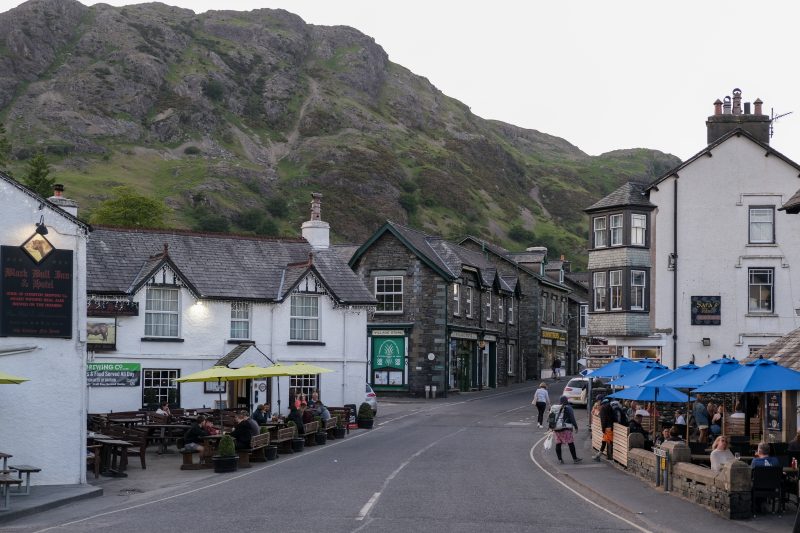
Located in a postcard friendly setting of Coniston, beside Coniston Water and in the shadow of the towering, rugged Old Man of Coniston, the Black Bull Inn is what most people probably picture in their mind’s eye when they hear the words ‘traditional country pub’; a whitewashed building with low ceilings and old, creaky floors where locals gather for a couple of pints on an evening on velvet red stools with dogs at their feet.
The pubs own microbrewery started life in 1994 when the owner visited the Gribble Inn in Chicester and sampled the beer they produced. He came home with the idea of brewing his own beer for the Black Bull. Their now-famous Bluebird Bitter – a traditional brown bitter brewed with English Challenger Hops and crystal malt – was first served in the bar in 1998 and was an instant hit with locals, picking up a few local awards along the way. However, it wasn’t until the brewers took their bitter to the Great British Beer Festival that they realised how good their brew was. Not only did it win the best standard bitter award, it was also crowned Supreme Champion Beer of Britain 1998.
Despite producing beer for 24 years, the brewery hasn’t expanded beyond the small building behind the Black Bull Inn, instead keeping its focus on making the best beer it can. Today, the brewery produces 8 ales, most of them fairly traditional, but Bluebird Bitter, with its orangey, caramel and biscuity malt flavours, remains the firm favourite.
The Brewery doesn’t offer official tours, but the brewers may occasionally let you have a peek inside the brewery if you catch them on a good day. However, you can sample most of their beers next door in the Black Bull, a 400-year-old inn that has seen famous faces such as John Turner, Samuel Taylor Coleridge, and William Wordsworthwander through its doors.

Ulverston Brewing Company
Ulverston Brewing Company started in 2006 from relatively humble beginnings. Following the demise of the town’s only native Brewery, Hartley’s, couple Anita & Paul began brewing beers for their friends and family in their garage. Demand grew and grew and finally they decided to take the plunge into full-time brewing. From humble beginnings, something bigger grows and Ulverston moved into an old stone building at the heart of their own town, originally built in 1875 as a Victorian cattle shed.
Ulverston is the birthplace of Stan Laurel, one half of the duo Laurel and Hardy, and each of the brewery’s beers is named for a Laurel and Hardy film in his honour.
Visitors can take an informal tour around the brewery most weekends or stop off for a pint in the Laughing Gravy bar on site.
Watermill Inn & Brewery
Situated between Kendal and Windermere in the tiny village of Ings and housed in a former watermill, the cosy Watermill Inn first opened back in 1990, whilst the brewery opened in a purpose-built extension in 2006. While the pub is worth a visit on its own, the experience is only improved by the fact that visitors can see into the brewery from one of the bars and watch the beer being brewed.


Hesket Newmarket Brewery
I first came across Hesket Newmarket Brewery via a collorative beer they created with the brewery that I work for, Leeds-based Northern Monk Brew Co. When the breweries realised that they both had a beer named Scafell, thery came together to make a new beer that incorporated both of their recipes, resulting in a juicy, tropical New England IPA.
Depite me only recently descovering Hesket Newmarket Brewery, they are rather long in the tooth in independent brewing terms. Tucked away in the beautiful North Lakes village of Hesket Newmarket, the brewery was first established by Jim and Liz Fearnley way back in 1988.
The couple built the brewing plant from scratch in the barn behind the pub they owned, The Old Crown in Hesket Newmarket, initially intending the beers to be only served behind their bar. The first brew was a bitter which Jim named Blencathra after his favourite Lake District fell. Jim and Liz sold the Old Crown pub in 1995 after 13 years and eventually retired from brewing in 1999. In order to save the Brewery from closure or take-over, a group of real ale enthusiasts from the village came together to buy it. The Hesket Newmarket Brewery Co-operative, are not profit driven and their sole aim is to keep the future of the brewery secure.
Grasmere Brewery
The tiny, grey-stone village of Grasmere is one of the Lake District’s prettiest villages, famed for its delicious local gingerbread and its literary connections; after all, William Wordsworth moved here in the late 18th century and made the surrounding valleys a magnet for those involved in the Romantic movement.
As with any tourist hotspot, Grasmere has its fair share of pubs but the latest addition to the village, The Good Sport, opened in 2018 as an outpost for the tiny Grasmere Brewery, located just a short hop away at Lake View Farm.
Run by husband and wife team, Paul and Beth Abbott, the brewery pumps out around 4,000 litres beer a week. Although the core beers consist of the usual lager, stout and pale ale, the couple have also expanded into producing ciders like their cloudy apple and rhubarb & berry. If you stop off at the Good Sport while exploring Grasmere, make sure to try their Amarillo Dry Hop IPA.


Bowness Bay Brewing
The Bowness Bay brewery started in 2012 in the Winster Valley at the heart of the Lake District, using equipment originally used by Northcote Brewery. In order to scale up production, the brewery relocated to Kendal in 2014, investing in a 14 barrel plant that can produce up to 3 brews per day.
Bowness Bay’s brews can be found in pubs all over the Lakes, but the best place to sample their beer is in the Barrel Store, their brewery tap in the Castle Mills complex opposite the brewery.
Barngates Brewery & The Drunken Duck Inn
The Drunken Duck Inn, hidden high on a hillside above the Lakeland village of Ambleside, just far enough from the tourist-crowded towns surrounding Windermere to feel like a secluded gem, is the kind of Lakeland pub that you stumble upon at the end of a long, wet walk and thank the heavens.
Originally a farmhouse, the whitewashed building has been a local pub for over 300 years. The current owners took over in the late 1970s turning it into one of the region’s first gastropubs, although this isn’t the usual fare of gammon and chips or steak and kidney pie that you’ll find at your local Harvester. ‘The Duck’ is serious about its menu, dishing up sublime yet unpretentious food (stuff like venison bourguignon suet pudding with sticky red cabbage or ham hock terrine) in its simple dining rooms or flag-stoned bar area.
Despite being a little more sophisticated than your average boozer, the Drunken Duck still retains the feel of a classic country inn without resorting to being kitsch and folksy; the rugs scattered on the oak floorboards lay in front of lit wood-burning stoves and dried hops hang from the exposed wooden beams above the slate-topped bar.
While the culinary prowess of the Duck is well publicised, the onsite brewery, Barngates, is one of the Lake’s best-kept secrets. Established in 1997 by the pub’s owners as an experimental venture so that they could supply their own ales, the brewery’s output is still small, but the beers can now be found beyond Ambleside in pubs across the Lake District. The brewery isn’t officially open to the public but tours can be arranged on request.
Lakes Brew Co.
After being made redundant from Hawkshead Brewery in March 2020 at the beginning of the Coronavirus pandemic, former colleagues Matt, Michelle, Steve & Paul came together over a shared passion for beer and reunited as Lakes Brew Co.
Aiming to be one of Cumbria’s most progressive, sociably innovative breweries, the team invested in a bespoke 16hl SSV brew kit and canning line and set up shop in Kendal. While most of the Lake District’s microbreweries can be seen as fairly traditional with their brews, Lakes Brew Co. Are very much a modern brewery, turning out New England and West Coast IPAs packed with new world hops. Their juicy and tropical DDH IPA made with Citra, Mosaic, Citra Cryo, Idaho 7, & Simcoe is well worth a try.
They don’t currently have a permanent taproom but do host pop-up events occasionally.
Unsworth's Yard Brewery
South-west of Kendal and a short hop from Morecambe Bay on the southern fringes of the lakes, the medieval town of Cartmel has undergone a culinary revolution in recent years. Although the winding country lanes and cobbled market square were already famed for being the home of sticky toffee pudding, the village became a must-visit for foodies thanks to the arrival of Simon Rogan and his world-renowned 2 Michelin Star eatery L’ Enclume. He has since added to his empire with the 1-star Rogan & Co and the six-seater chef’s table restaurant Aulis Cartmel.
For those that don’t want to splurge on a fine dining experience, Unsworth’s Yard, opposite the village’s twelfth-century Augustinian priory, is home to a fantastic cheese shop and a five-barrel microbrewery of the same name. The brewery can be viewed through large windows from the tasting room bar and shop.
Ambleside Tap Yard
Tank beer has been part of Czech culture for decades and tank bars (tankovnas) are as synonymous with the country as Franz Kafka, Petr Cech, or Pilsner Urquell itself. The difference between tank bars and traditional pubs is that rather than dispensing beer from kegs that may have been sitting in cellars for weeks or even months, tankovnas dispense from large copper containers that are filled with fresh unpasteurized beer direct from the brewery. The theory is that the beer should be much fresher, as if drunk direct from the brewery.
It’s a system that hasn’t really caught on here in the UK, but it is being embraced by Ambleside’s Tap Yard. Situated in the old mill yard adjacent to the historic Bridge House, the Tap Yard collects beer directly from the brewery where it is transferred from the brewer’s conditioning tanks, into 500-litre vats for transportation, before being pumped into the 6 copper tanks that sit above the bar.
Although the Tap Yard has strong links with Brewdog, don’t let that put you off visiting, as they will normally have a number of fantastic beers by local Cumbrian breweries occupying their tanks.